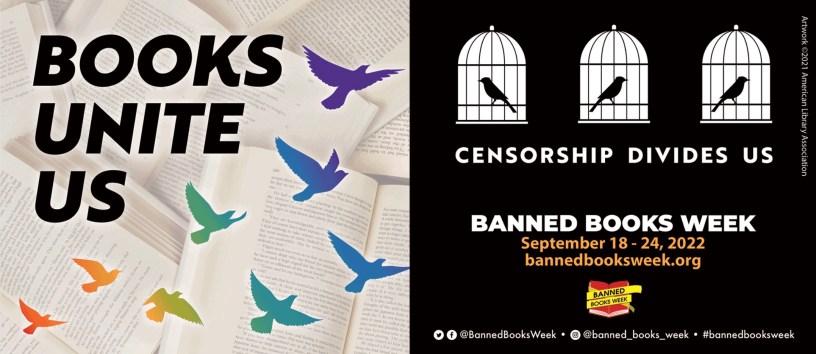
The American Library Association (ALA) has chosen the phrase “Books Unite Us, Censorship Divides Us” as the theme for Banned Booked Week 2022. Book access advocacy seems like a fundamental intellectual exercise of schools and libraries, but, sadly, all across the country there are numerous attempts to ban books from students’ access. I personally experienced this phenomenon over the last two years.
** Below is an excerpt of a letter that I wrote during the 2021-22 school year from my perspective as an 11th grade English teacher. I have adjusted the text and removed identifying names and titles to preserve some anonymity. This long-form text was prefaced with the timeline of what I experienced in my role as a high school representative on the ELA curriculum adoption committee. Also included at the end of my letter were student testimonials about their beliefs on book access. I shared this document with my departmental colleagues, my administrators, and other district leadership personnel. No formal written response was received in return. I contemplated sending it to our local school board, but ultimately did not feel supported to do so without repercussions.**
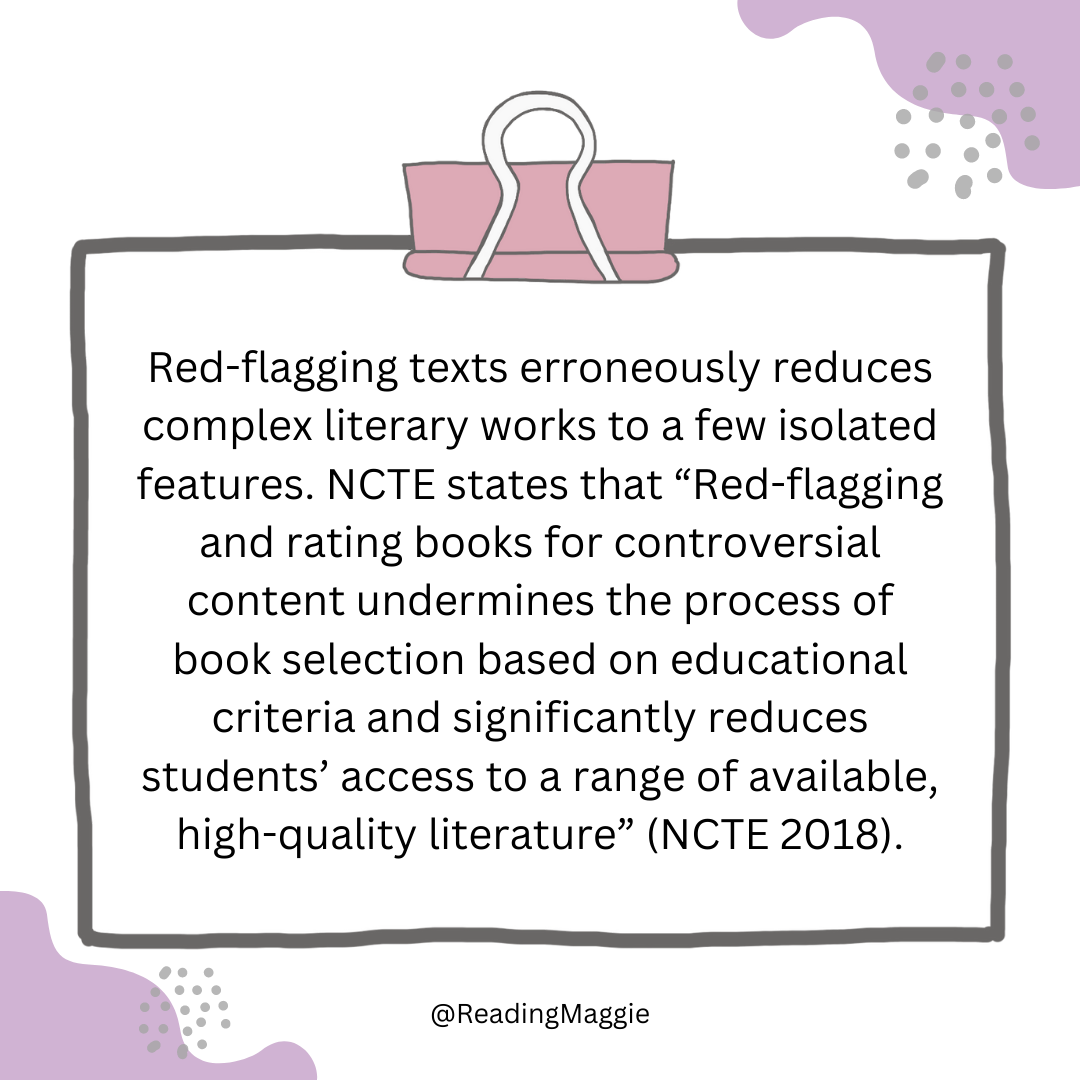
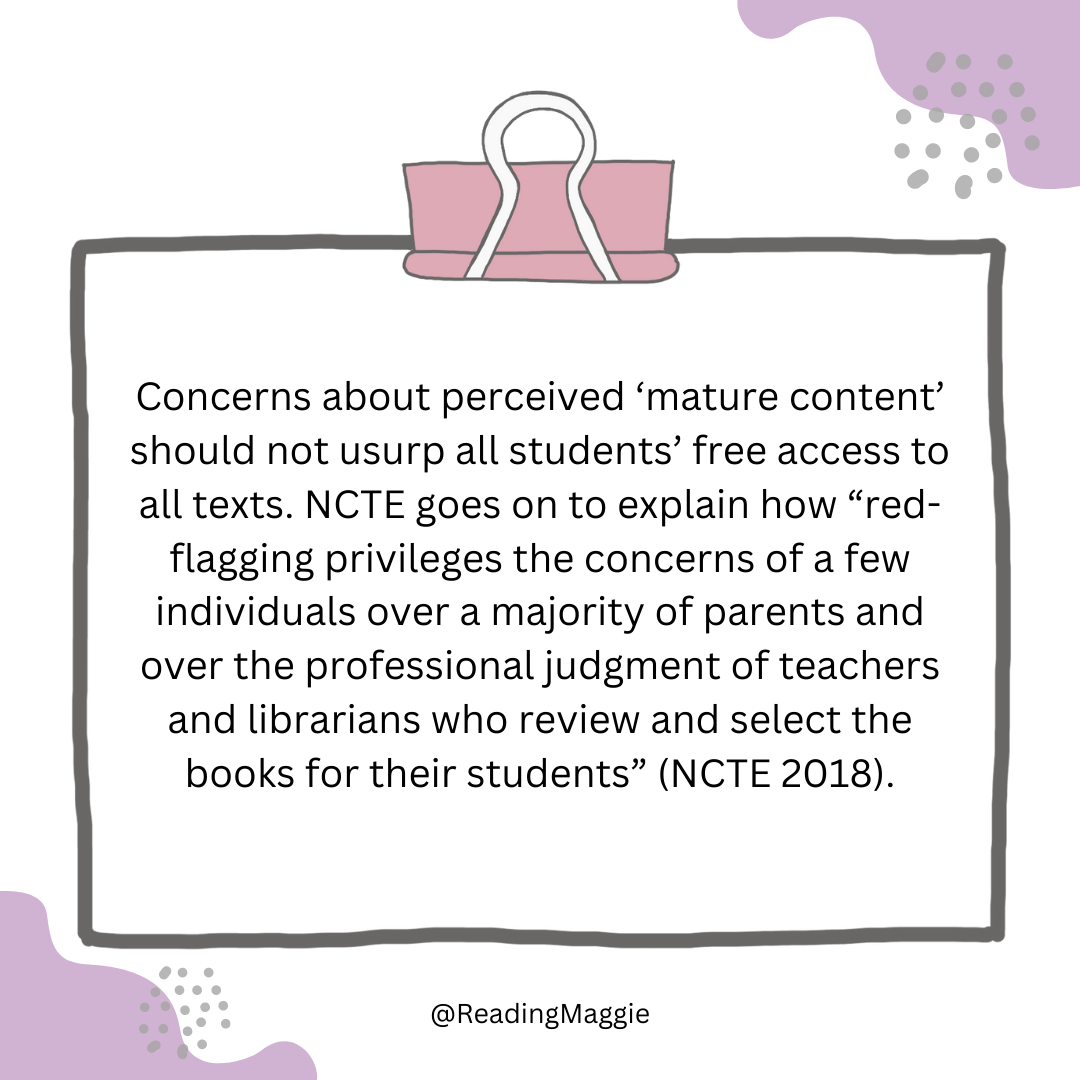
…there is a much larger issue at play here: the quiet red-flagging and delaying/denying of access to novels that some deem ‘inappropriate’ or that contain ‘mature content’. These novels were not chosen randomly nor without careful consideration. Brandon Valley prides itself on being “one of the most progressive school districts in South Dakota” (BVSD website), but that is simply not true if district leadership is effectively censoring and unofficially banning books. Red-flagging texts erroneously reduces complex literary works to a few isolated features. The National Council of Teachers of English (NCTE) states that “Red-flagging and rating books for controversial content undermines the process of book selection based on educational criteria and significantly reduces students’ access to a range of available, high-quality literature” (NCTE 2018). Concerns about perceived ‘mature content’ should not usurp all students’ free access to all texts. NCTE goes on to explain how “red-flagging privileges the concerns of a few individuals over a majority of parents and over the professional judgment of teachers and librarians who review and select the books for their students” (NCTE 2018). Brandon Valley High School is the best high school in South Dakota (for many years, awarded through a variety of data collections and determinations); we are a public school where many families seek to enroll their children. As a public school, parents should not be the determining factor in curricular decisions. Parents with these strong curricular concerns can choose other means of schooling for their own children; however, a parent should not have the ability to restrict the reading access of all our students. Implementing a new curriculum should always be about giving students access to more, not less.
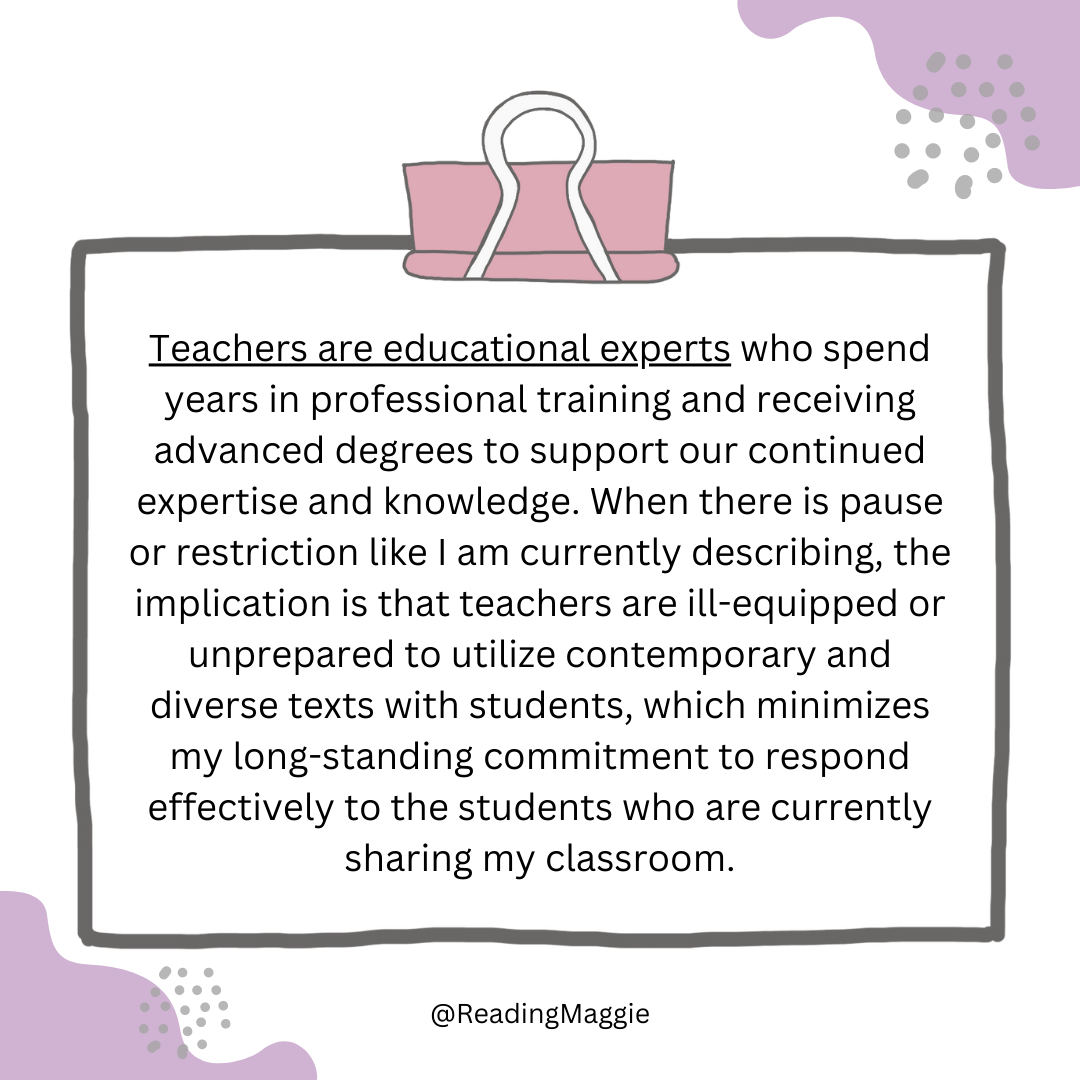
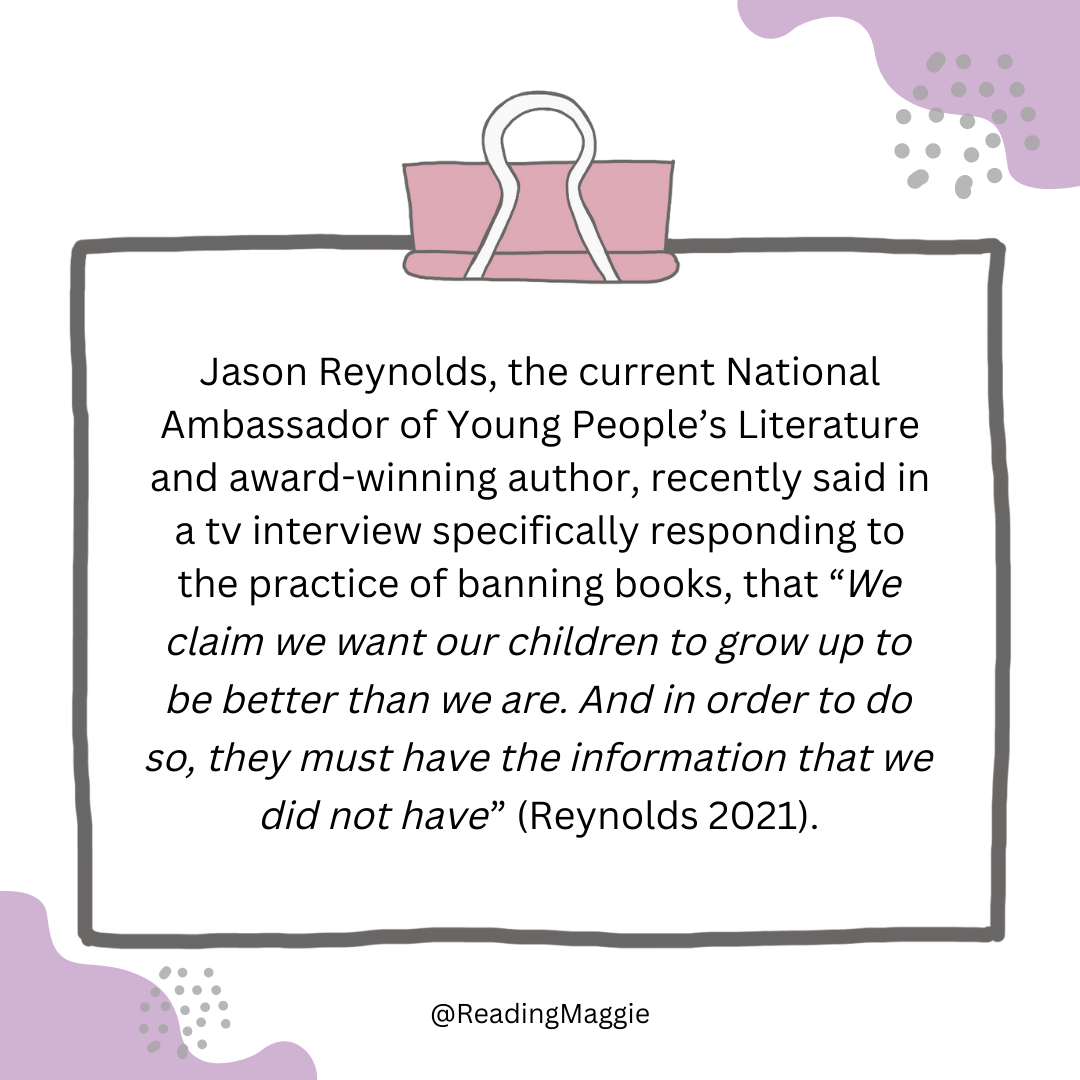
Teachers are educational experts who spend years in professional training and receiving advanced degrees to support our continued expertise and knowledge. When there is pause or restriction like I am currently describing, the implication is that teachers are ill-equipped or unprepared to utilize contemporary and diverse texts with students, which minimizes my long-standing commitment to respond effectively to the students who are currently sharing my classroom. Jason Reynolds, the current National Ambassador of Young People’s Literature and award-winning author, recently said in a tv interview specifically responding to the practice of banning books, that “We claim we want our children to grow up to be better than we are. And in order to do so, they must have the information that we did not have” (Reynolds 2021). This is a powerful statement that strikes to the core of what I wish to share with you today.
The young people are already watching and listening and soaking in the world through each other and all types of media. To try and shield students from uncomfortable ideas isn’t education at all. Dr. Adam Grant, a Professor of Organizational Psychology, explains that “in healthy learning cultures, students are invited to take intellectual risks” (Grant 2021). I am here and ready to support and cultivate students’ encounters with the larger world. That larger world, accessible through literature, should not be quietly curated down to the most unobjectionable texts to quell any perceived criticisms.
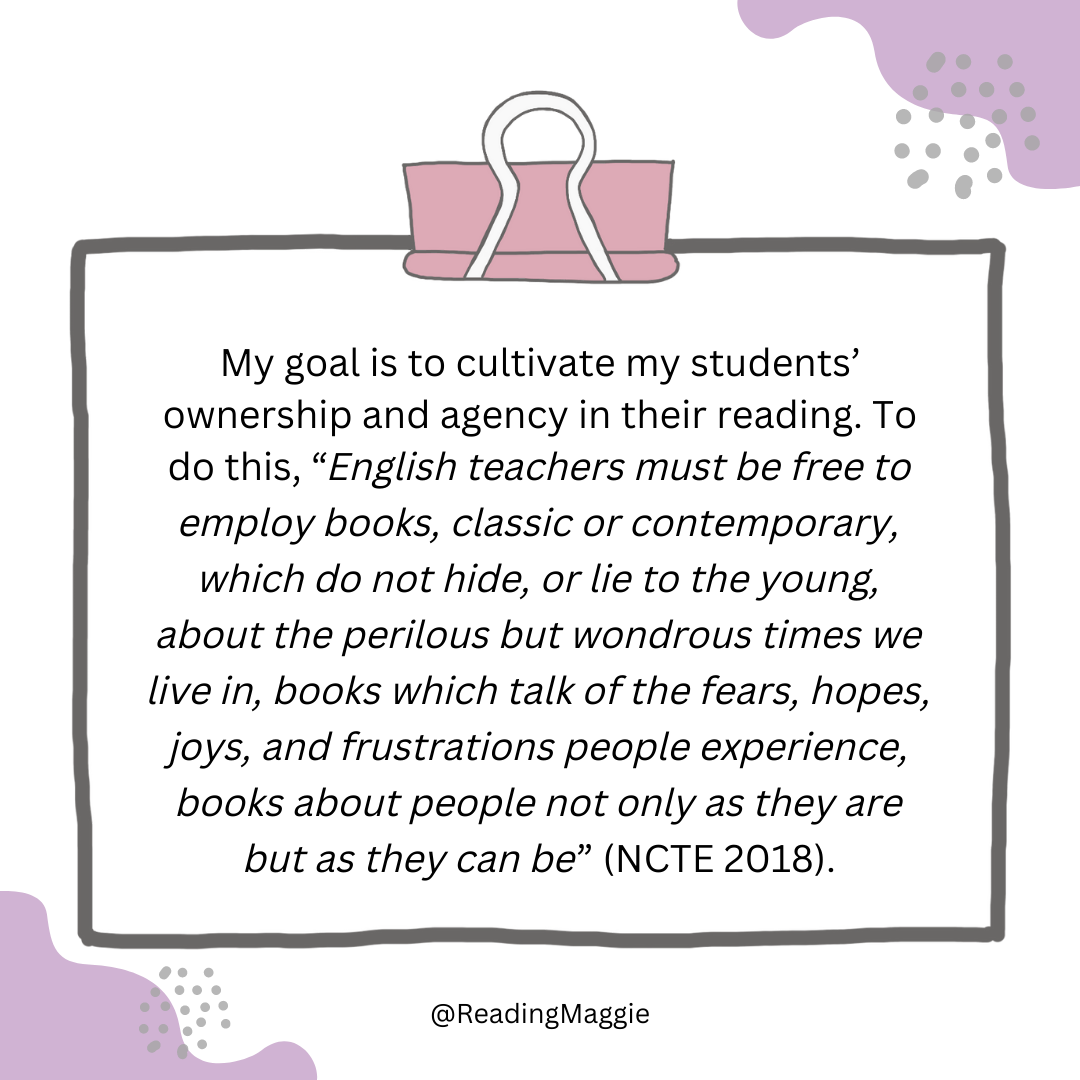
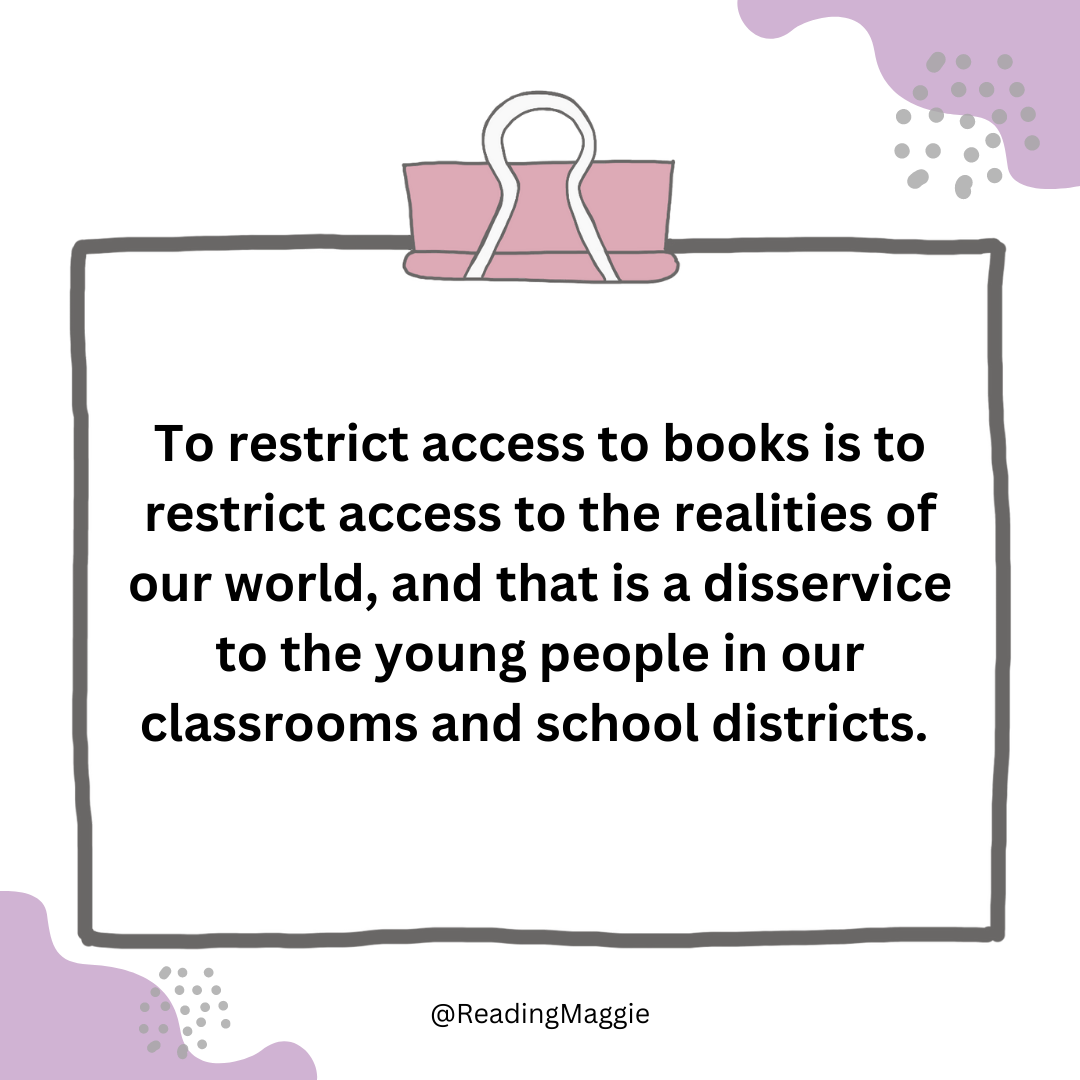
NCTE succinctly explains how “In selecting texts to read by young people, English teachers consider the contribution each work may make to the education of the reader, its aesthetic value, its honesty, its readability for a particular group of students, and its appeal to young children and adolescents” (NCTE 2018). To choose literature for students to read, and also have students self-select from, is a weighty responsibility that I and my fellow high school English teachers do not take lightly. I relish the opportunity to engage young people with books that will not only interest them, but also teach them about our world. When a teacher selects books that have difficult topics or content, I am prepared to offer the context necessary and to work tirelessly to build school environments that are safe and comfortable for all students to engage. My goal is, largely, to cultivate my students’ ownership and agency in their reading. To do this, “English teachers must be free to employ books, classic or contemporary, which do not hide, or lie to the young, about the perilous but wondrous times we live in, books which talk of the fears, hopes, joys, and frustrations people experience, books about people not only as they are but as they can be” (NCTE 2018). To restrict access to books is to restrict access to the realities of our world, and that is a disservice to the young people in our classrooms and school district.
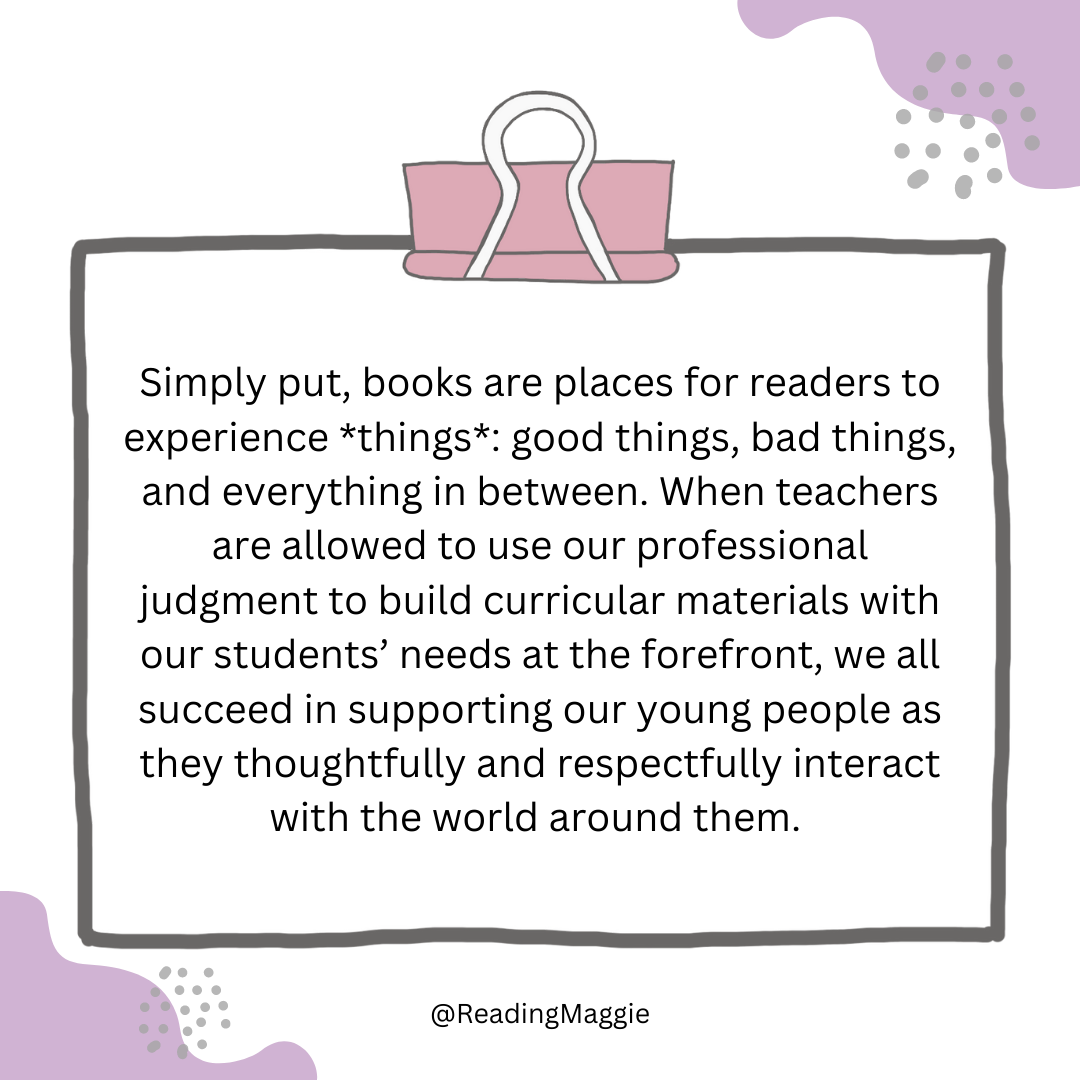
Reynolds (2021) also said in his interview that “Young people can really show us what compassion looks like… can show us what empathy looks like.” He couldn’t be more correct. Access to literature is often explained through Dr. Rudine Sims Bishop’s (1990) analogy of books as mirrors, windows, and sliding glass doors. Books allow readers to see experiences that mirror their own, books allow readers to view and learn by seeing through someone else’s perspective, and books allow readers to make connections between their world and the rest of the wide world they may not get to experience themselves. Simply put, books are places for readers to experience *things*: good things, bad things, and everything in between. When teachers are allowed to use our professional judgment to build curricular materials with our students’ needs at the forefront, we all succeed in supporting our young people as they thoughtfully and respectfully interact with the world around them.
** End of excerpt **

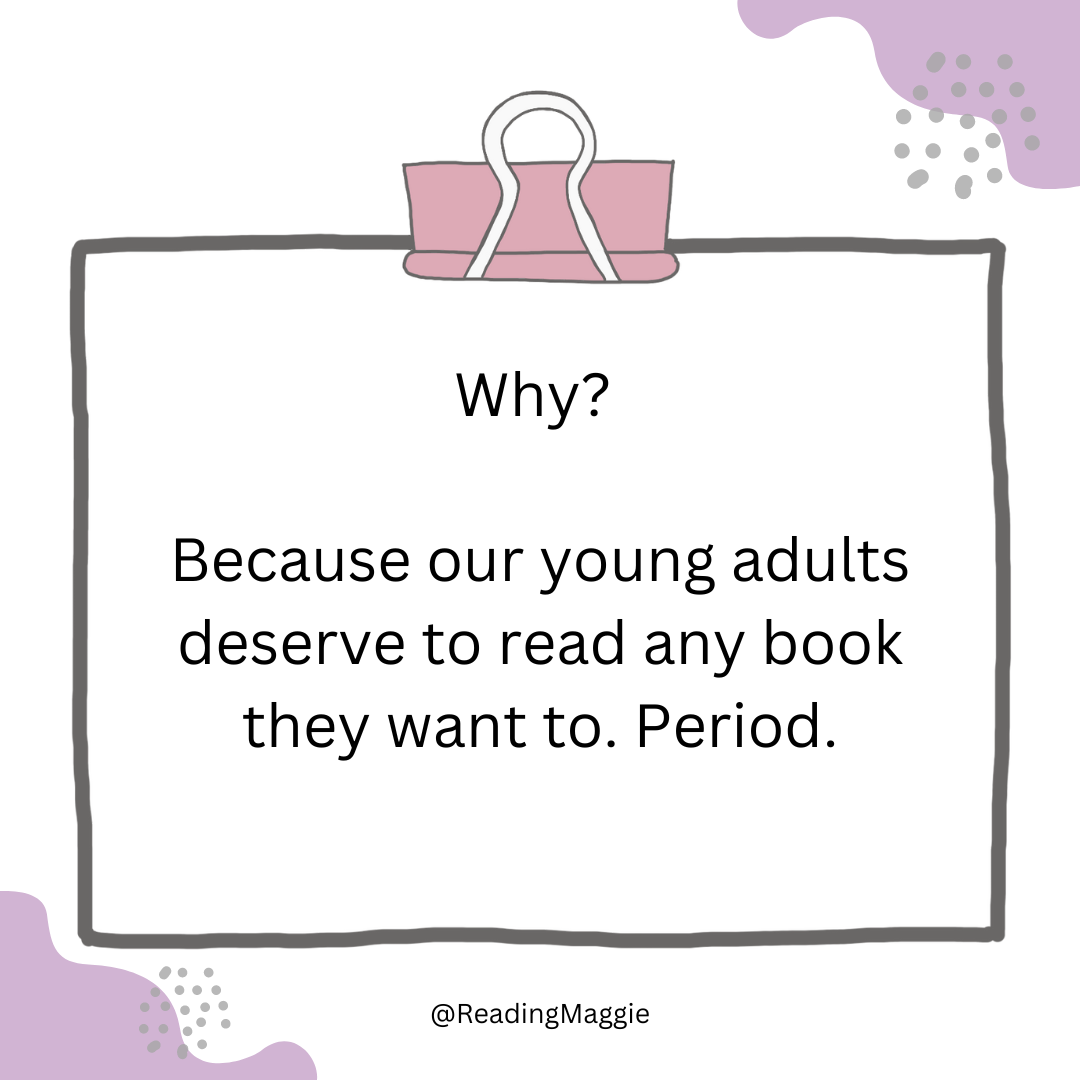
The American Booksellers Association is using the tagline “I Read Dangerously” to bring awareness to Banned Books Week 2022. That line reminds me of Nelson Mandela’s famous quote “Education is the most powerful weapon which you can use to change the world”. I’d go so far as to say that if we believe reading to be an integral pathway to education, then books are our most powerful tool to change the world. To close, I would be remiss if I did not urge you to check in on your local English teachers and librarians. I implore you to support those who are trying so hard to provide students with stories for all readers. Unfortunately, the reality of the situation is that those loud nay-sayers are getting all the airtime (the squeaky wheel gets the grease, after all). We need you, the seemingly ‘ordinary’ person, to voice your reasonable support of book access for all. Why? Because our young adults deserve to read any book they want to. Period.
Resource: I’ve had an article bookmarked for months about the New York Public Libraries offering *free* out of state library cards to anyone who wants access to banned books. The instructions are easily followed within the article, linked here.
Acknowledgements: Thank you to my many teacher friends and colleagues who have long supported my work to increase students’ book access. Thank you also to my students- this work matters because YOU matter, always.
Works Cited
Bishop, Rudine Sims. “Mirrors, Windows, and Sliding Glass Doors”, Perspectives: Choosing and Using Books for the Classroom. Vol. 6, No. 3. (1990).
Grant, Adam. Originals: How Non-Conformists Move the World. Viking, 2016.
Position Statement Regarding Rating or ‘Red-Flagging’ Books, National Council of Teachers of English. (2018). https://ncte.org/statement/rating-books/
Recognizing Teacher Experts and Their Paths to Expertise, National Council of Teachers of English. (2021). https://ncte.org/statement/recognizing-teacher-experts-and-their-paths-to-expertise/
Reynolds, Jason, interview by Stephen Colbert, The Late Show with Stephen Colbert, CBS, December 2nd, 2021.The Students’ Right to Read, National Council of Teachers of English. (2018). https://ncte.org/statement/righttoreadguideline/
 Maggie's Musings & Moments
Such well placed passion!
LikeLike